Topic outline
-
-
Conclusion
The integration of Generative AI within higher education signifies a technological advancement and a profound paradigm shift in pedagogical methodologies, skill acquisition, and the foundational principles of academic integrity. This discourse emphasises that all primary stakeholders—including industry representatives, academics, students, and integrity officers—acknowledge the transformative potential of Gen-AI whilst concurrently harbouring concerns regarding the potential erosion of critical thinking, core professional competencies, and ethical discernment.
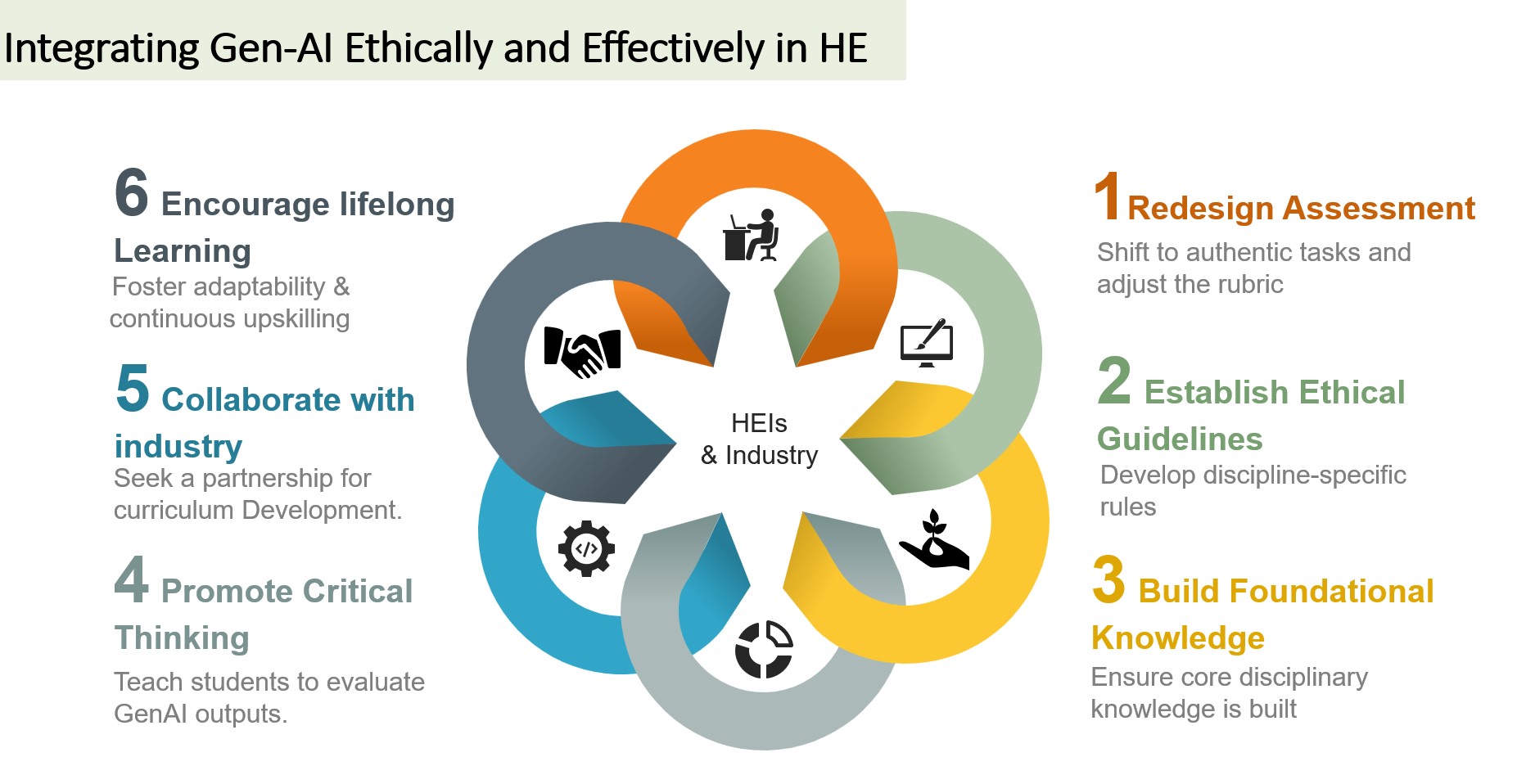
For academic educators, the imperative is unequivocal: institutions must evolve from passive observation to active, strategic engagement. This necessitates the re-evaluation and redesign of assessment frameworks to promote genuine learning experiences, the development of discipline-specific ethical guidelines for AI utilisation, and the implementation of comprehensive professional development programs for faculty. Through fostering a culture rooted in continuous scholarly enlightenment and cultivating robust partnerships between industry and academia, tertiary education institutions can equip graduates with an integrative skill set—combining technical expertise, critical analysis, ethical judgment, adaptability, and effective communication—that qualifies them to be proficient, reflective, and ethically conscious contributors in an AI-augmented landscape. Such a strategic orientation will ensure that Generative AI acts as an enhancer of learning outcomes rather than a diminisher, thereby safeguarding the integrity and credibility of academic qualifications while augmenting graduate employability.
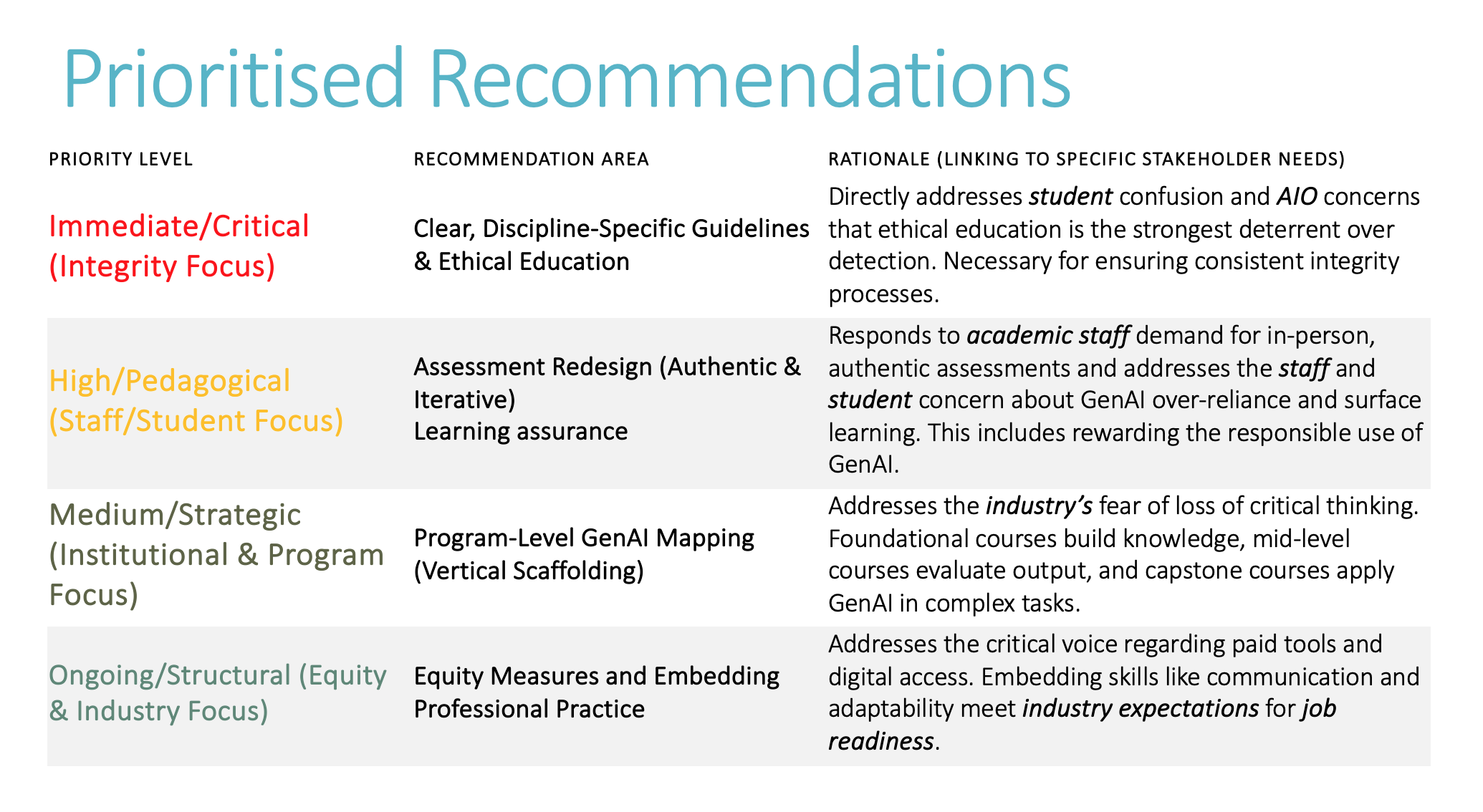
Prioritised Recommendations
-